
Baby Sleep Support for Exhausted Parents in Singapore
Without cry-it-out!
Night wakings, short naps, and difficult bedtimes can leave you exhausted and unsure what to try next. I’m Han Ying, a certified baby and toddler sleep consultant in Singapore.
I help you understand your baby’s sleep and guide you towards restful nights without cry-it-out.





To the tired mama running on little sleep
I know how exhausting it can feel when your baby isn’t sleeping well.
Like many parents, I started out doing everything I could to help my baby sleep, yet still felt depleted, overwhelmed, and unsure what else to try.
Experiencing sleep deprivation firsthand showed me how deeply sleep affects not just our babies, but our emotional and physical wellbeing as parents.
With the right guidance and a structured, responsive approach, sleep became more settled and our days felt calmer and more manageable again.
Today, I support families across Singapore in helping their babies learn healthy, independent sleep through a structured and responsive approach so sleep can become calmer, more predictable, and sustainable.
Common Baby Sleep Struggles Parents Face
Most parents I work with are are loving, responsive, and trying their best.
Yet sleep still feels unpredictable and exhausting with these symptoms.

Catnapping
Your baby takes short naps (30–45 minutes) and struggles to connect sleep cycles during the day.

Co-Sleeping
You want to transition your baby or toddler from co-sleeping to sleeping independently in their own cot or room, but don’t know where to start.
Multiple Night Wakings
Your baby wakes every 1–2 hours at night and needs feeding, rocking, or your presence to fall back asleep.
Sleep Props
Your baby relies on rocking, feeding, patting, or a pacifier to fall asleep.

Chronic Sleep Deprivation
Your child isn’t getting enough sleep, becoming overtired, irritable, and finding it hard to settle.

Stalling Bedtime Antics
Bedtime becomes long and frustrating, with your child resisting sleep or repeatedly calling you back.
A Gentler Transition Before Sleep Training
Instead of rushing families straight into formal sleep training and expecting your child to suddenly do everything differently overnight, we first strengthen the foundations that make sleep progress feel more realistic for both parent and child.
During this transition phase, we focus on:
Gradually reducing reliance on rocking, patting, carrying, or feeding to sleep
Observing your baby’s natural sleep patterns and wake times
Adjusting routines if your baby currently feeds or is heavily supported to sleep
Preparing your baby for sleeping in the cot with more confidence and less overwhelm
Most of my clients begin seeing some improvements during this phase. Their baby may start settling more easily, become more comfortable in the cot or need less help to fall asleep.
This often helps both baby and parents feel better prepared, making formal sleep training less overwhelming when we start.

The Sleep Foundations Method™: A Structured Approach to Baby Sleep
I use a structured, timing-first approach to help babies and young children build sustainable sleep habits without rushing them into change before they are ready.
Step 1: Understand Your Baby’s Individual Sleep Timing and Patterns
Every baby is different. Instead of relying on generic wake-time charts, I look at real sleep patterns to understand how your baby responds to sleep and wake times in daily life.
This helps us:
Avoid unnecessary overtiredness or undertiredness
Reduce confusion at bedtime and naps
Set your baby up for smoother settling
Step 2: Prepare Your Baby for Sleep Training
Before formal sleep training begins, we make sure the foundations are in place. This includes things like timing, routines, and realistic expectations.
This preparation phase is about helping both baby and parents feel more ready for change.
Step 3: Build Independent Sleep Skills Gradually
Once timing is right and expectations are clear, we work on independent sleep in a structured, staged way that is appropriate for your child’s age and needs.
Some protest or crying can be a normal part of learning something new, but this approach aims to reduce unnecessary struggle by ensuring babies are put down at an appropriate time and supported through change consistently.
This method is about creating sleep that lasts, not just quick fixes or one-size-fits-all solutions.
A Responsive Approach to Baby Sleep Support
Many parents worry that helping their baby sleep independently means leaving them to cry or pushing change too quickly.
That isn’t how I work.
My approach is responsive, timing-led, and developmentally appropriate.
We focus on understanding your child’s sleep needs first, then supporting change gradually, with consistency and reassurance.
This means:
Responding to your baby’s cues, not ignoring them
Making changes only when timing and readiness are right
Supporting emotional safety alongside independent sleep skills
Helping parents feel confident and informed, not pressured
Independent sleep doesn’t have to come at the cost of connection.
With the right support, babies can learn to sleep while still feeling safe, supported, and understood.
What Working Together Can Look Like

Newborn Sleep Support
(0 – 12 weeks)
In the early weeks, we focus on understanding your baby’s sleep, setting up healthy sleep routines and helping you navigate things like wake times, naps, day and night sleep, feeding and settling.
From around 8 weeks, we can start giving your baby opportunities to practise self-settling at bedtime first.
Once bedtime becomes easier, we gradually move on to naps one by one, rather than changing every sleep at once.
This gives your baby time to adjust and makes the process feel much more manageable, especially when they’re still so little.

Infant & Young Toddler Sleep Coaching
(13 weeks – 23 months)
For babies who rely heavily on sleep props, wake frequently, take short naps or have a schedule that just doesn’t seem to work.
Where needed, we start with a gradual transition phase first.
I’ll monitor your baby’s sleep, work out a suitable starting schedule and then guide you through sleep training step by step.
We start with bedtime first, then gradually move on to naps once bedtime is going more smoothly.

Toddler Sleep Coaching
(2 – 5 years)
Toddler sleep can be exhausting in a completely different way.
Maybe your child needs you beside them to fall asleep, keeps calling you back into the room, wakes overnight looking for you or bedtime has become one long negotiation.
At this age, we look at both sleep and behaviour.
We first prepare your toddler for the changes before working towards calmer, more independent sleep.
Success Stories from Other Parents
"I feel like I could finally breathe again!"
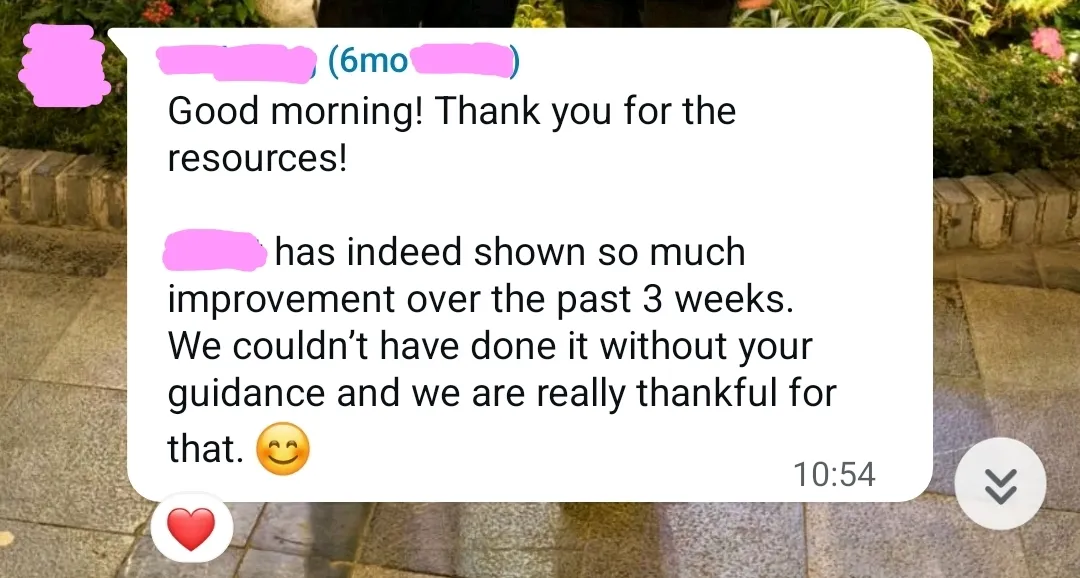
6-Month-Old Baby
Bedtime settling improved to about 15 minutes
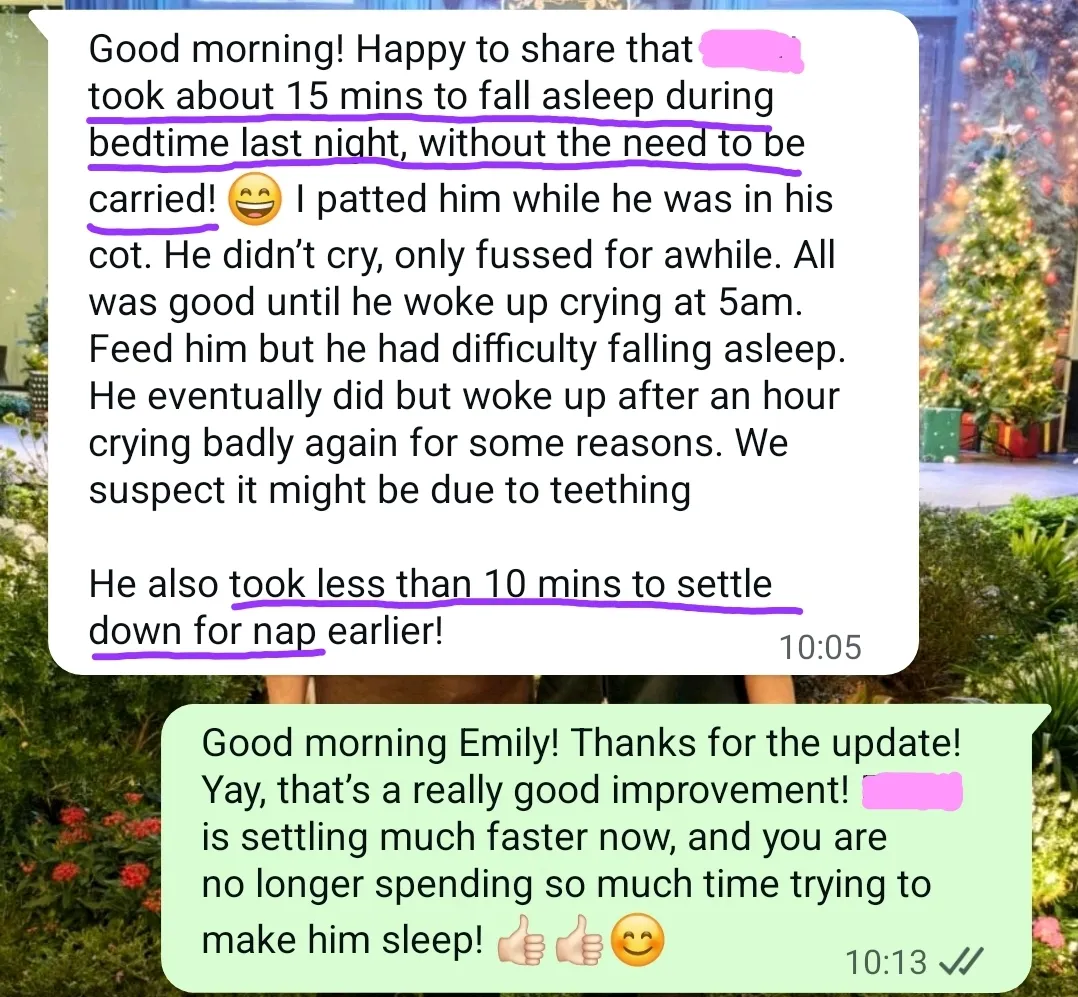

From frequent wakings to 12 hours overnight
12.5-Month-Old Baby
Parents feeling confident adjusting wake times

"I can finally manage sleep and stop worrying"
22-Month-Old Toddler
From worried parents to calm, predictable sleep
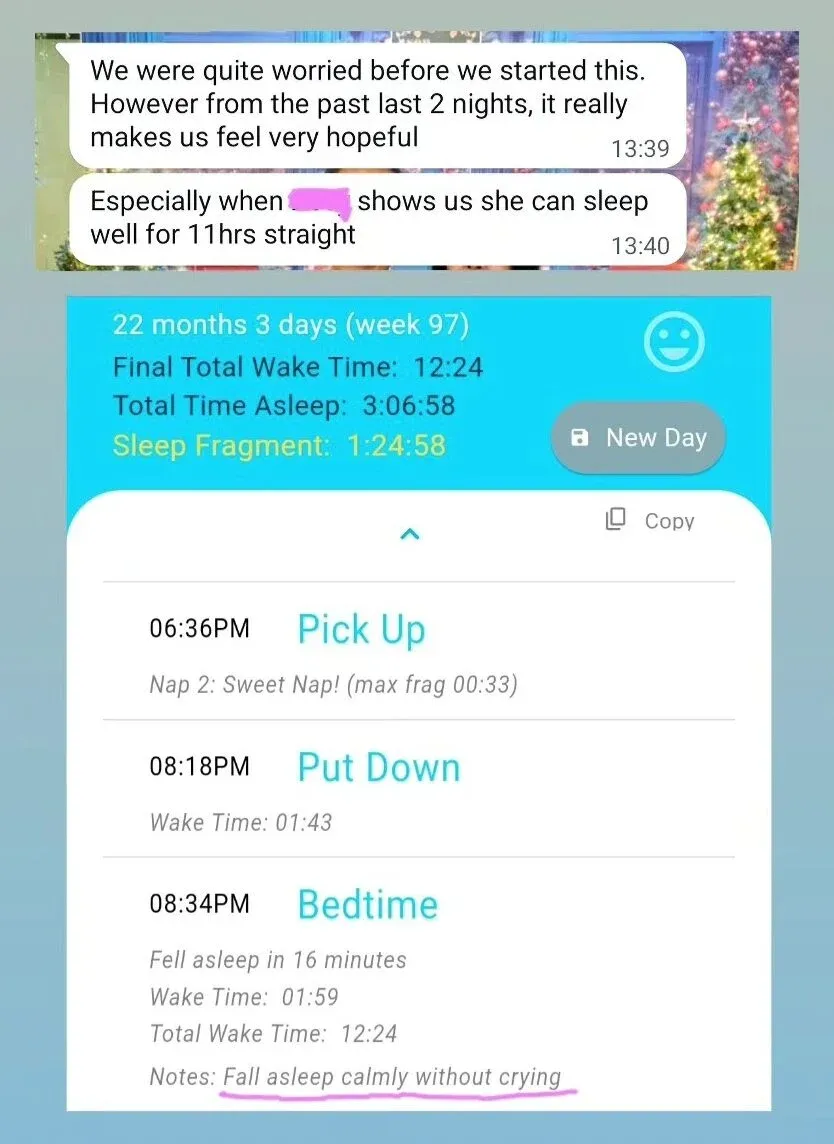


Gail, mum of Raon
Lynnette, mum of Lexy
No more carrying baby to sleep for naps or bedtime
Night wakings and overnight feeds eliminated
Babies now falling asleep independently and sleeping through the night

Sleep isn’t a luxury — it’s a necessity
When sleep is consistently disrupted, it affects how both mums and babies feel and function during the day.
For mums, poor sleep can make it harder to:
Stay patient and emotionally regulated
Think clearly and make decisions
Maintain energy, mood, and resilience
For babies and toddlers, when sleep is fragmented or insufficient, children may:
Become more irritable, fussy, or unsettled
Struggle to regulate emotions
Find it harder to focus and learn during the day
Supporting better sleep isn’t about perfection. It’s about protecting the wellbeing of both you and your child.
Ready for you and your baby to have a good night sleep?
Or download the free Night Wakings Guide if you are not ready to talk yet.



©2026 Rested Mum Happy Bub. All Rights Reserved.